 how-to
How to Reconcile Anxiety With Faith: A Christian Guide
Table of Contents
- Understanding Anxiety and Fear Through a Christian Faith Perspective
- Christian Prayer for Anxious Thoughts: A Practical Starting Point
- Bible Verses for Anxiety and Fear: Anchoring Your Mind in God's Truth
- Christian Anxiety Coping Strategies: Daily Practices for Peace
- Replacing Anxious Thoughts With Spiritual Truth
- When to Seek Christian Counselling for Anxiety
- Reconciling Persistent Anxiety With Strong Faith
- Your Next Step: Building a Personal Plan
- Frequently Asked Questions
Last Updated: October 19, 2026
Understanding Anxiety and Fear Through a Christian Faith Perspective
Anxiety and fear are not signs of weak faith.
At Christ Counselling Centre, we work with people caught between these two worlds: they pray and read Scripture, yet anxiety still arrives.
Anxiety is your body's alarm system, designed to protect you, but sometimes it stays on when there's no real danger.
Reconciling anxiety with faith starts with self-compassion. You're not failing God, you're human, and humans experience fear.
Christian Prayer for Anxious Thoughts: A Practical Starting Point
Prayer is not a magic fix. But it is a proven anchor point. Mental Health America research on faith and mental health notes that faith practices can create helpful routines and structure that may lower stress. Prayer works partly because it gives your anxious mind something specific to do instead of spiral.
Praying with Philippians 4:6-7
Philippians 4:6-7 is one of the most direct passages on anxiety. It says: "Do not be anxious about anything, but in every situation, by prayer and petition, with thanksgiving, present your requests to God."
This passage doesn't say anxiety will vanish. It says bring it to God. Here's how to pray with this verse when anxiety hits:
- Name what you're afraid of. Don't pray vague prayers. Say exactly what worries you: "I'm afraid I'll fail at this project" or "I'm anxious about my health."
- Ask God for help. Be specific. "Help me focus on what I can control" or "Give me peace about what I cannot."
- Add gratitude. Even one small thing. "I'm grateful I have people who care" or "I'm thankful for this moment of stillness."
The verse continues: "And the peace of God, which transcends all understanding, will guard your hearts and your minds in Christ Jesus." That peace acts as a guard, protecting your thoughts from spiraling further.
Casting Your Anxiety on God
"Cast your anxiety on him because he cares for you" (1 Peter 5:7). "Cast" means throw it, release it, hand it over, an active choice, not passive waiting.
Casting anxiety on God means:
- Acknowledge the worry is real. Don't pretend it away.
- Decide to release it. Say it aloud if it helps: "I'm giving this to God."
- Take one small action aligned with your faith. If you're anxious about finances, cast the worry but also make a budget. If you're anxious about health, cast the worry but also schedule a checkup. Faith and action work together.
Anxiety often returns after you pray. That's normal, your brain learned to worry, and rewiring takes time. Each time it returns, cast it again; repetition trains your mind toward peace.
Bible Verses for Anxiety and Fear: Anchoring Your Mind in God's Truth
Scripture is full of verses about fear and worry. These aren't just comfort words. They're truth statements designed to redirect your thinking when anxiety takes over.
Key verses to anchor yourself:
- 2 Corinthians 11 addresses weakness and fear. Paul writes about his own struggles, showing that even strong believers experience fear.
- Psalm 27:1, "The Lord is my light and my salvation, whom shall I fear?"
- Isaiah 41:10, "So do not fear, for I am with you; do not be dismayed, for I am your God."
- Proverbs 3:5-6, "Trust in the Lord with all your heart and lean not on your own understanding."
These verses work best when you know them by heart. When anxiety strikes suddenly, you can't always reach for your Bible. But a verse you've memorized is always with you.
Memorizing and Meditating on Scripture
Memorization sounds old-fashioned but is one of the most powerful anxiety tools available: memorizing Scripture rewires your brain's default thoughts.
Here's how to memorize a verse for anxiety:
- Pick one verse. Don't try five at once.
- Read it aloud three times daily. Morning, midday, evening.
- Write it down by hand. This engages more of your brain than typing.
- Say it during anxious moments. When worry hits, repeat the verse. Your brain will start to associate that moment with the truth you've memorized.
Meditation differs from memorization: it means sitting with a verse and letting it speak. Read Philippians 4:6-7 and ask: What does "cast your anxiety" mean for me today?
Meditation slows your anxious mind. It moves you from spinning thoughts to focused reflection. Even five minutes of Scripture meditation can shift your nervous system.
Christian Anxiety Coping Strategies: Daily Practices for Peace
Daily practices matter more than occasional big efforts: five minutes of prayer every morning likely changes more than an hour once a month. Consistency rewires your nervous system.

Building Spiritual Habits and Routines
Routine creates safety for your nervous system: structure means your brain works less to manage uncertainty. Spiritual routines do this while connecting you to your faith.
Try this daily rhythm:
- Morning (5 minutes). Read a short passage. Pray about your day. Name one thing you're grateful for.
- Midday (2 minutes). Pause. Take three deep breaths. Repeat a verse you've memorized.
- Evening (5 minutes). Reflect on where you saw God today. Write down one moment of peace or provision.
This isn't rigid, some days you'll do all three, some days one. The goal is consistency, not perfection.
A faith-led routine also includes practical elements:
- Sleep on a regular schedule
- Eat meals without scrolling
- Spend time in nature
- Connect with other believers
These practices seem simple because they are. Anxiety thrives in chaos and isolation. Routine and connection are its opposite.
Grounding and Breathing Practices Rooted in Faith
When anxiety peaks, your nervous system is in fight-or-flight mode: shallow breath, racing thoughts. Grounding techniques bring you back to the present moment.
The 5-4-3-2-1 grounding technique:
- Name 5 things you see
- Name 4 things you can touch
- Name 3 things you hear
- Name 2 things you smell
This technique works because it pulls your attention away from anxious thoughts and into your immediate surroundings.
Faith-centered breathing:
Breathe in slowly while thinking, "God is with me." Breathe out while thinking, "I release this fear." Do this for two minutes.
Replacing Anxious Thoughts With Spiritual Truth
Anxiety often sounds like a voice in your head: "You'll fail." "Something bad will happen." "You're not enough." These thoughts feel true because they feel real.
But they're not facts. They're your anxious brain making predictions based on fear, not evidence.
Here's how to replace them:
Step 1: Notice the thought. Don't judge it. Just observe it: "I'm having the thought that I'll fail."
Step 2: Test it against truth. Ask: Is this true? Is this what God says about me? What does Scripture say instead?
This process is called cognitive reframing. Faith-based counselling combines this psychological tool with Scripture, making it doubly powerful.
When to Seek Christian Counselling for Anxiety
Faith is powerful, but it isn't a replacement for professional help when anxiety is severe.
If you're experiencing any of these, professional support will help:
- Anxiety that interferes with sleep, work, or relationships
- Panic attacks (sudden, intense fear with physical symptoms)
- Intrusive thoughts you can't control
- Anxiety that's getting worse despite prayer and Scripture
Seeking help is not a failure of faith. It's stewardship of the body and mind God gave you.
Professional Support Alongside Your Faith Practice
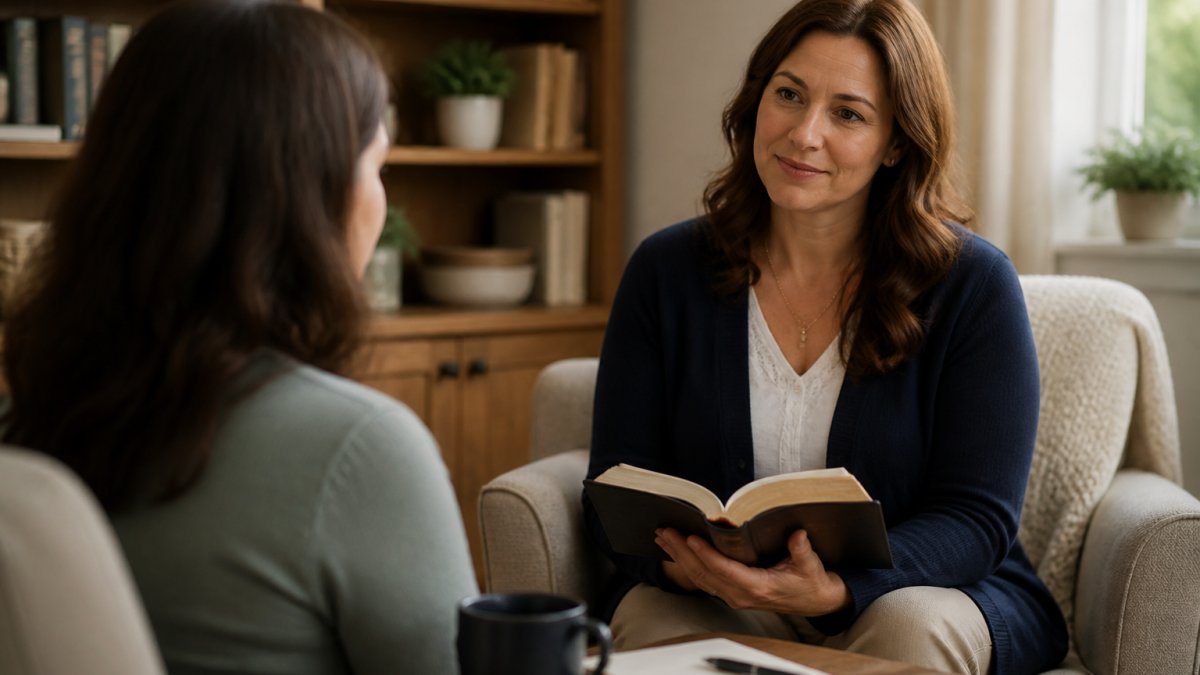
A Christian counselor understands both psychology and faith. They won't tell you to just pray harder. They'll help you understand what's driving your anxiety and give you tools to manage it.
The best Christian counselling combines:
- Evidence-based techniques (like CBT)
- Scripture and spiritual perspective
- Practical coping strategies
- Compassion for your struggle
Christ Counselling Centre's library includes faith-led, CBT-informed resources designed specifically for this. These ebooks bridge Scripture and proven psychological tools, written by an ordained minister with an Advanced CBT Diploma.
Choosing a Christian Counselor
When looking for a Christian counselor, ask:
- What training do they have? (Look for credentials like a counselling diploma or therapy certification)
- How do they integrate faith and psychology?
- Do they understand anxiety specifically?
- Are they ordained or part of a faith community?
A good Christian counselor won't push you. They'll meet you where you are, whether you're strong in faith or wrestling with doubt.
Reconciling Persistent Anxiety With Strong Faith
Many Christians face this tension: "If I truly believed, wouldn't my anxiety be gone?"
The answer is no. And that's not weakness.
Research on religious orientation and anxiety from PubMed Central shows that religious faith has been associated with anxiety both positively and negatively.
Here's what's true: You can have strong faith AND persistent anxiety. These aren't opposites.
Strong faith means:
- Trusting God even when you're afraid
- Bringing your real struggle to Him, not pretending
- Taking action (prayer, counselling, routine) while trusting the outcome
- Believing God is with you in the anxiety, not just if it goes away
Anxiety doesn't mean your faith is weak. It means you're human, and you're working to align your thoughts with truth.
Your Next Step: Building a Personal Plan
Start small. You don't need to implement everything at once.
Choose one thing from this guide:
- One verse to memorize
- One prayer practice (like Philippians 4:6-7)
- One daily routine (morning reflection, evening gratitude)
- One grounding technique to try when anxiety peaks
Do that one thing for two weeks. Notice what shifts. Then add another.
If anxiety is severe or persistent, reach out to a Christian counselor. Professional support isn't a step backward. It's part of stewarding your mental health well.
Anxiety alongside faith is a real struggle for many Christians, you're not alone.
Frequently Asked Questions
Does experiencing anxiety mean I lack faith?
No. Anxiety and strong faith can coexist. Research shows that how you view God or a higher power affects how religious practice relates to anxiety, but faith itself doesn't automatically eliminate worry. Even biblical figures like David expressed fear and distress in the Psalms. A Christian counselor can help you understand that anxiety is a human experience, not a sign of spiritual failure or weak belief.
How can a Christian counselor help with anxiety differently than prayer alone?
A Christian counselor combines faith-based spiritual practices with evidence-based tools like cognitive behavioral therapy (CBT). While prayer and Scripture provide comfort and spiritual grounding, CBT techniques help you identify and gently challenge anxious thought patterns. This integrated approach addresses both your spiritual needs and the practical mechanics of how anxiety works in your mind and body, offering a more complete toolkit for lasting change.
What Bible verses are most helpful for anxiety and fear?
Philippians 4:6-7 encourages bringing anxious requests to God with thanksgiving, promising His peace. 1 Peter 5:7 invites you to cast your anxiety on God because He cares for you. 2 Corinthians 11 acknowledges that even faithful people face hardship and distress. The Psalms (like Psalm 23 and Psalm 27) offer honest expressions of fear alongside trust in God. Meditating on verses that resonate personally with your experience often provides deeper comfort than generic reassurance.
How do I start using Christian prayer for anxious thoughts in my daily life?
Begin by naming your specific worry to God, just as Philippians 4:6 suggests. Instead of trying to suppress the thought, acknowledge it and ask God for help. You might use a simple prayer like, 'Lord, I'm worried about [specific thing]. Help me trust You and find peace.' Pairing prayer with deep breathing creates a calming physical response. Many find it helpful to set aside a specific time each morning or when anxiety rises, making prayer a reliable habit rather than something you only do when panic strikes.